
This is the second post about my Monday Night Star Trek Adventures Game, but first, a few words about my recent creative pivot into GM’ing online RPG’s.
After a surgery last year, and new time demands (arduous and joyous ones!) from my family, I took a sabbatical from my fiction writing, and my 15 year-running scifi fiction storytelling podcast at ServingWorlds.com…how exactly, you ask, did that lead to me running Star Trek games professionally?
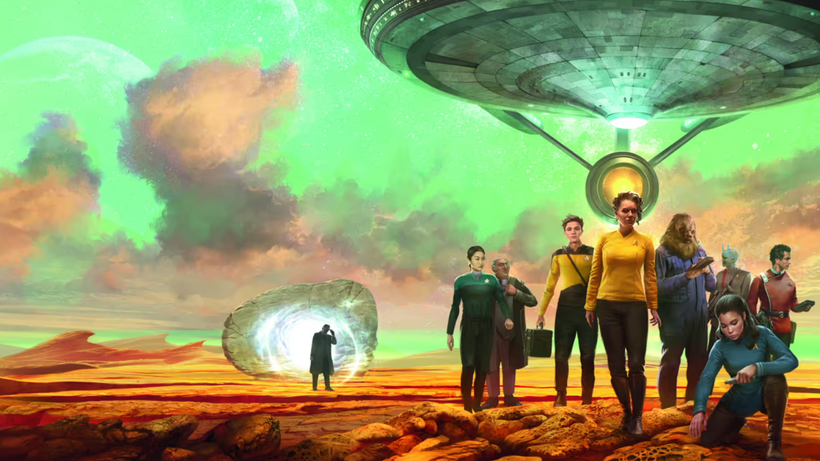
TL:DR Not three years ago the core rulebook for a Tabletop Role Playing Game launched for Star Trek Adventures, Second Edition (unpaid endorsement link).
I had a few dalliances with RPG during the Pandemic (didn’t everyone 🙂 but Star Trek Adventure’s 1st Edition didn’t win me over. Second Edition did. It was this new, hopeful vision of a future we can all strive for today that dragged me all the way in. I started Game-Mastering the system… and now GM’ing Star Trek is a solid paying gig.
My last post touched a little on this, but I felt I needed to ‘splain a little bit more about my trajectory from writing narrative to leading improvised, shared-world story building.
OK. Back to business:
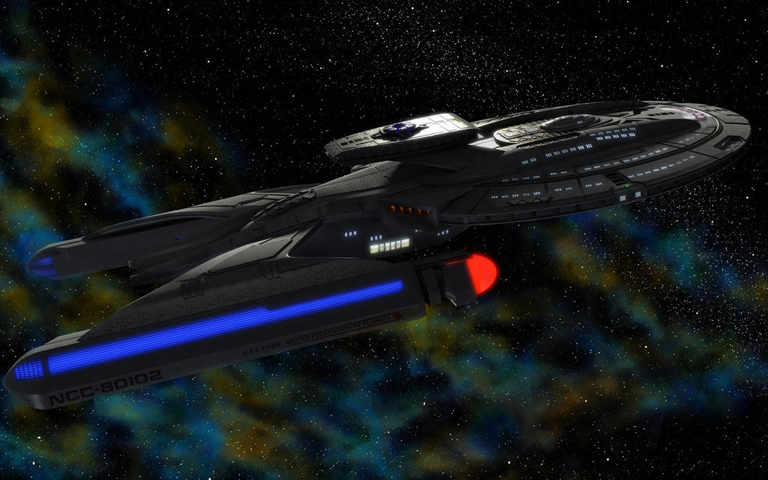
In my last post, the crew of the USS Artemis was tasked with discovering why the natural laws governing a Nebula had gone crazy, and trapped an Oberth class starship inside it. Gravity was reversing itself and bizarre waves from subspace were pouring energy into the nebula and randomly popping up subspace rifts that led to light-years away. The crew of the Artemis saved the Oberth with their more powerful shields, and gambled on their ship’s integrity again to escape the rising surges of gravity and energy through one of those rifts.
All of the above choices were chosen by the dice, and my previously scribbled options of what could happen based on rolls. Because I trusted myself to let random rolls chart a path forward, the narrative presented the characters with unique challenges and opportunities.
Like it says in the title, once the GM has done his homework, and the dice have chosen which of my fevered ideas would actually occur, it’s time to Trust the Players.
This time around, our players were faced with an enemy inspired by one of their own: an Augment with an agenda to unseat the Federation and bring his own less kind, less gentle leadership to the galaxy. His powerful ship blocked their escape, threatened to destroy the starship and jammed communications so our heroes couldn’t call for help.
The augments were, of course, ridiculously intelligent, and had figured out how to use the decaying Genesis wave to fuel their as-yet unrevealed scheme…and target any sub-space elements the same way he did the Nebulae.
Since starships travel by creating a warp field, tapping into subspace, that poses an incredible threat to our ship and crew.
As always, it’s the Players’ job to decide how to foil that scheme.
The Augment, one Thomas Mallory of the Sentry Institute (a shuttered think-tank, discovered to be a front for Augments with a mission of unseating the Federation) toys with our crew. He debates ethics with our Captain (because the Captain chose to buy time with debate). He taunts our Science Officer, because he knows she’s also an Augment (and because the Science Officer wanted to embrace her fear and indecision about being discovered, and possibly kicked out of Starfleet for it).
Once Mallory tired of debating with the Captain, our Engineer wanted to use her knowledge of shields and warp technology in a game of cat and mouse, and so that’s what a good hour of our session became: figuring out the limits of Mallory’s technology, ways the crew could counteract them.
At this point, a GM has to keep track of events, guess how they will impact the characters, and follow their choices to decide how the ‘non-player character’ NPC’s and the universe will respond… but always leave enough flexibility in the dice rolls to avoid forcing events to follow a certain path.
Nobody likes being railroaded…but we’ll talk more about that in the next post 🙂
Over the course of the third hour of the session, the Augment taunted the Science Officer to reveal her Augmented status, then attempted to seduce her into betraying the crew to join them. Trusting the player led to an amazing heroic speech about how Mallory is becoming the monster the federation expects all Augments to be, and cemented her commitment to starfleet, even if it meant her secret came to light.
The Science Officer learned more about the subspace manipulations the Augments were performing, and slowly deciphered how to avoid them… and perhaps even defuse or reverse them, leading to a plan to defeat Thomas Mallory and his crew.
Nobody at the Table expected how the night would unfold. Everyone realized their characters had been integral in defining the events of the story, and choosing how they as characters would choose to resolve it… or attempt to, anyways.
Sometimes those pesky dice ruin the best laid plans 🙂
Most importantly, from my perspective, none of it would have happened if the GM couldn’t let go and Trust the Players.
What will happen next?
Will the crew of the USS Avandar continue to avoid Mallory’s ship and subspace-altering technology?
Will our characters survive with their lives…and secrets… intact?
Will three Nebulae erupt in cosmic fire, devastating untold millions of lives?
That would be telling…
…which I’ll do in the next post.
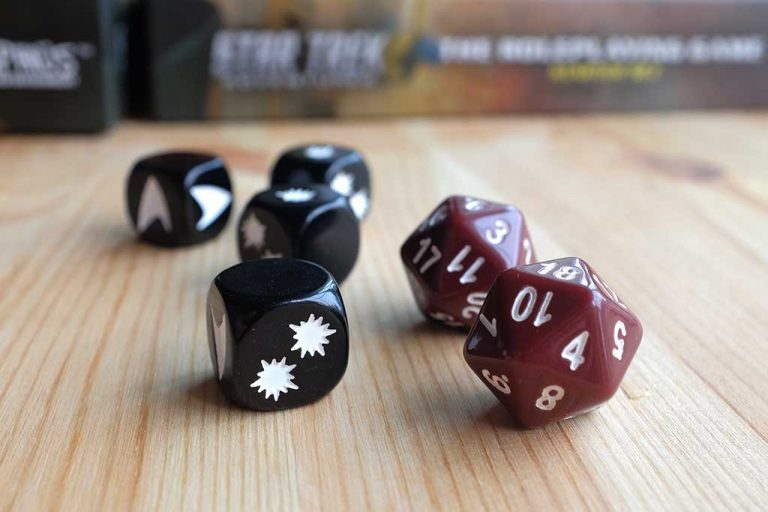
The next post also explores on the third part of the magic of cooperative storytelling telling:
Once a GM trusts dice to create randomness and opportunity, and their players to find solutions and create meaning…they have to trust themselves to let that alchemy take on a life of its own, and not force the game to meet their own conscious, or unconscious, expectations.
See? I told you GM’ing was the -ahem- mirror universe version of a writer’s job.